
The Great Arctic Standoff: Why the Fight for Greenland Matters to NATO
The Strategic Crisis That Could Redraw Global Order
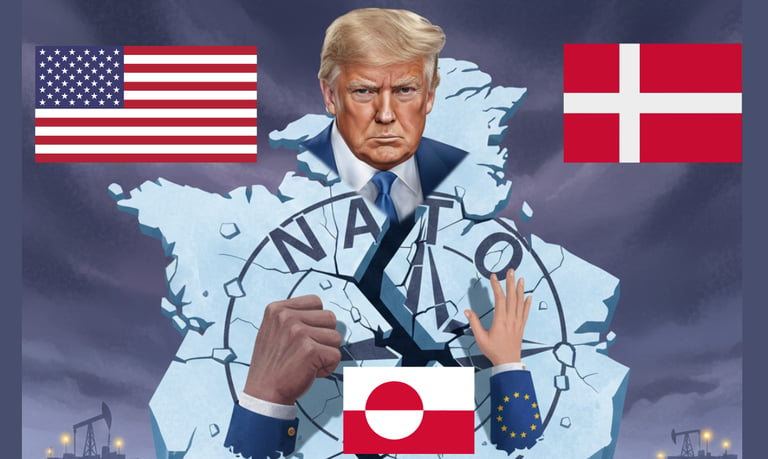
Greenland is a massive island covered mostly in ice, but its history is rich and full of change. For hundreds of years, it has been part of the Kingdom of Denmark. Over time, the people of Greenland have gained more power to run their own lives, like managing their schools and businesses. However, Denmark still handles their military defense and big international deals. Today, Greenland is moving closer to becoming its own independent nation, but a new interest from the United States has put those plans into the global spotlight.
Why Everyone Wants a Piece of the North
Why is everyone talking about a giant block of ice? It’s because the world is changing. As Arctic ice melts, new paths for ships are opening up, making travel between continents much faster. Underneath that ice, there are also massive amounts of gold, oil, and "rare earth minerals" used to make everything from smartphones to electric cars. President Trump has therefore called Greenland a "national security priority," believing that whoever controls this island will control the future of global trade and energy.
The Shadow of Russia and China
A major reason for the current tension is President Trump’s warning about "uninvited guests" in the Arctic. He has claimed that Russian and Chinese ships are increasingly circling Greenland’s waters, looking to set up bases or claim resources. The US is worried that if they don't step in, America’s rivals will gain a foothold right in the Western Hemisphere. To the White House, buying or controlling Greenland isn't just a real estate deal; it's a defensive shield to keep Russia and China away from North American borders.
Denmark Stands Its Ground
Denmark and the people of Greenland have a very clear message: "We are not for sale." Danish leaders were shocked when the US suggested a takeover, calling the idea "absurd" and an insult to their sovereignty. They argue that Greenland is not a piece of property to be traded, but a home to 56,000 people who have the right to choose their own future. This disagreement has created a massive rift between the US and Denmark—two countries that have been best friends and allies for decades.
European Leaders Speak Out
It isn't just Denmark that is upset; leaders across the European Union (EU) are stepping in. High-ranking officials from France, Germany, and the EU have called the US pressure "unacceptable." They have issued statements saying that the era of big countries simply "seizing" land from smaller ones must stay in the past. European leaders have vowed to take action—potentially through trade penalties or legal battles—if the US tries to force Denmark into giving up the territory. They see this as a test of whether international laws still matter.
Can the U.S. Actually Take It?
Many people wonder if the US has the "right" to do this. Under international law, the answer is no. A country cannot legally take land from another sovereign nation just because they want it. While some in the US Congress support the idea of a peaceful purchase—similar to how the US bought Alaska in the 1800s—most experts say the world has changed since then. Today, the "right" belongs to the people living there, and without their permission, any move to seize the land would be seen as an illegal act of aggression.
The Cost of the Island
President Trump has suggested that the US could pay billions of dollars to "relieve" Denmark of the financial burden of supporting Greenland. Some estimates say the price tag could be anywhere from $12 billion to over $70 billion. However, Denmark says they don't want the money, and the EU has promised to help Greenland financially so they don't feel pressured to take a US deal. The standoff has become a "battle of the checkbooks," with both sides trying to prove they can better provide for the island’s future.
A World on Edge: The 20-Day Ultimatum
The biggest worry today is what this standoff does to NATO, the group of countries that promised to protect each other. If the US continues to pressure or threaten Denmark—a founding member of the alliance—it breaks the fundamental trust that has held the Western world together since WWII. As of early January 2026, this situation has shifted from a debate to a ticking clock. President Trump has issued a bold 20-day ultimatum to begin formal discussions on the island's future, hinting that a final decision must be reached within two months. In response, Denmark has taken the extraordinary step of rearming Greenland, pledging over $13 billion to strengthen the island’s defenses and surveillance against "uninvited guests."
While Greenland’s leaders have officially sought urgent talks with the US to lower the temperature, Secretary of State Marco Rubio is already preparing for a high-stakes visit to the region next week to discuss a potential purchase. Markets are feeling the tension, with European defense stocks surging to record highs as nations across the continent brace for a new era of military readiness. Whether this leads to a diplomatic breakthrough or a historic fracture between the world’s oldest allies remains to be seen, but the "Greenland Crisis" is now officially a race against time that could change our maps and the global order forever.